

Options for Securing a Commercial Lease
When entering into a commercial lease, landlords often require some sort of security that the tenant will fulfill the terms of the lease. At National Lease Advisors, we see a number of different security deposit options in our lease administration clients’ leases. For tenants, the best one, and the one the landlord will agree to, depends on a variety of factors, such as the financial strength of the tenant, the rent obligation, and the amount of lease incentives the landlord is providing. This article will explore the pros and cons of the most common security deposit options, including cash security deposits, letters of credit, and guaranties.
1. Cash Security Deposit
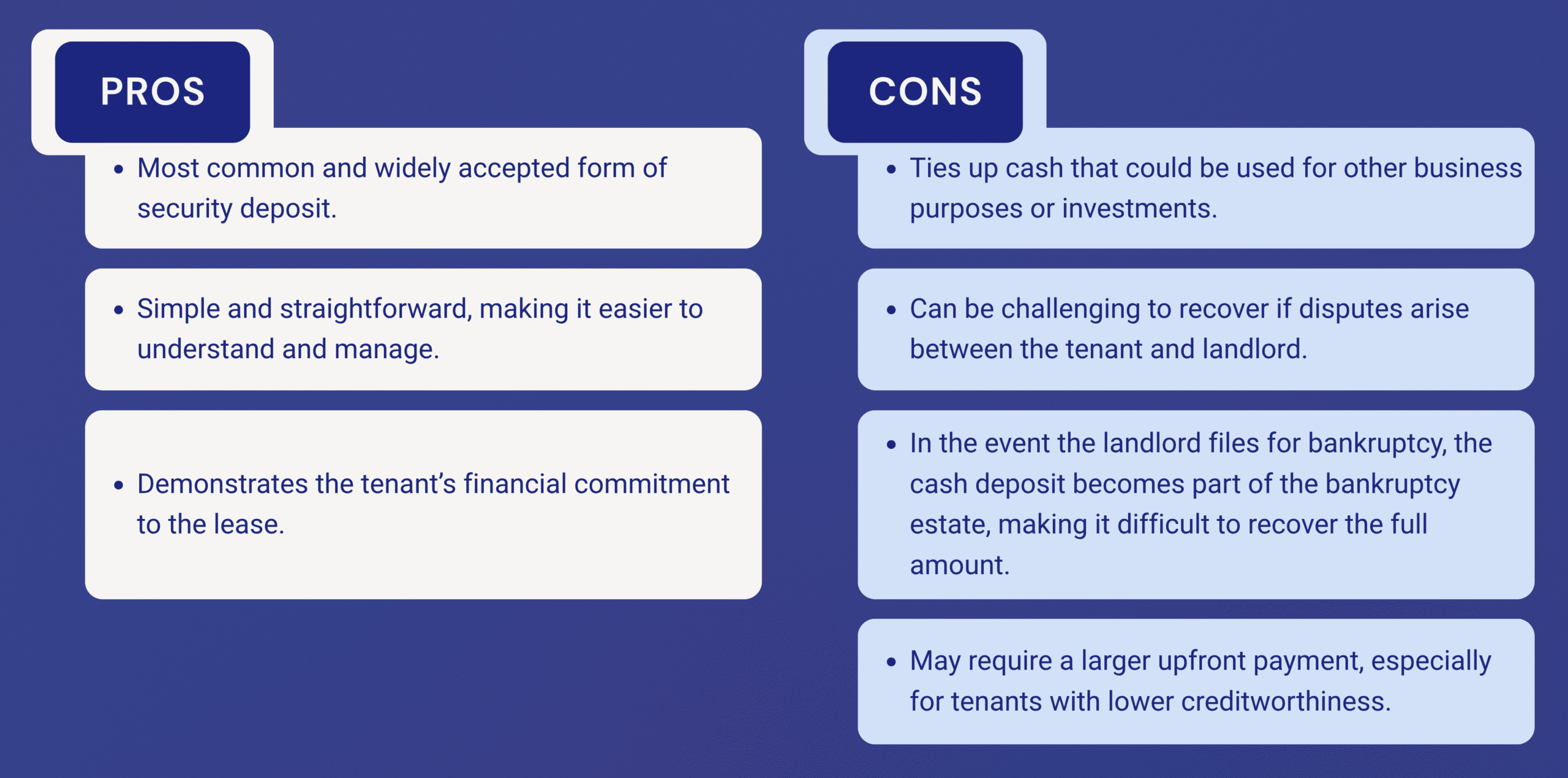
A cash security deposit is cash provided to the landlord at the beginning of the lease term. Following the conclusion of the lease (or earlier if negotiated in the lease), the deposit is returned to the tenant, subject to the terms of the lease.
2. Letter of Credit
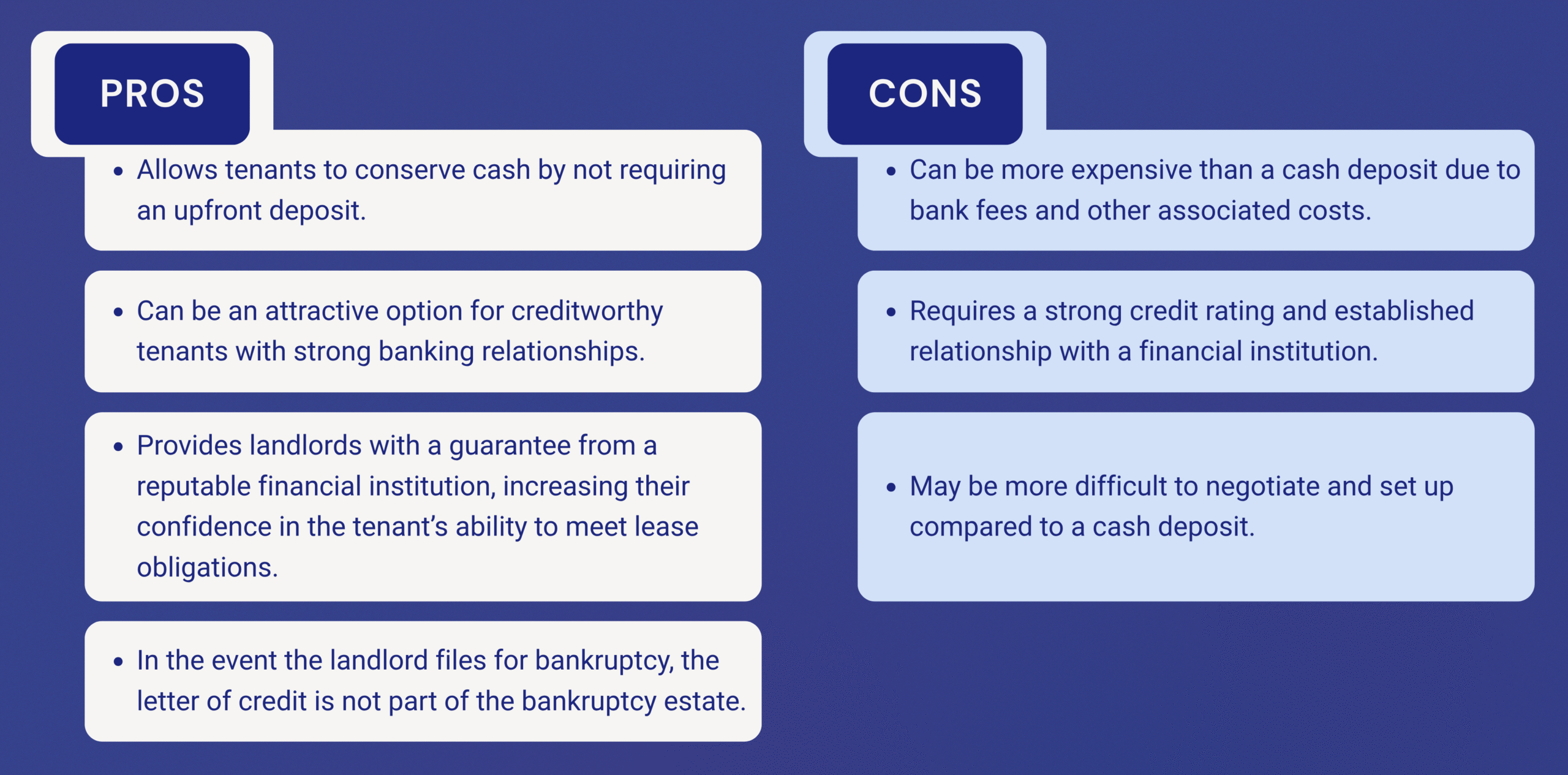
A letter of credit is a financial instrument negotiated with the tenant’s bank that guarantees the rent payments up to a certain amount, typically in lieu of a cash security deposit.
3. Corporate Guaranty
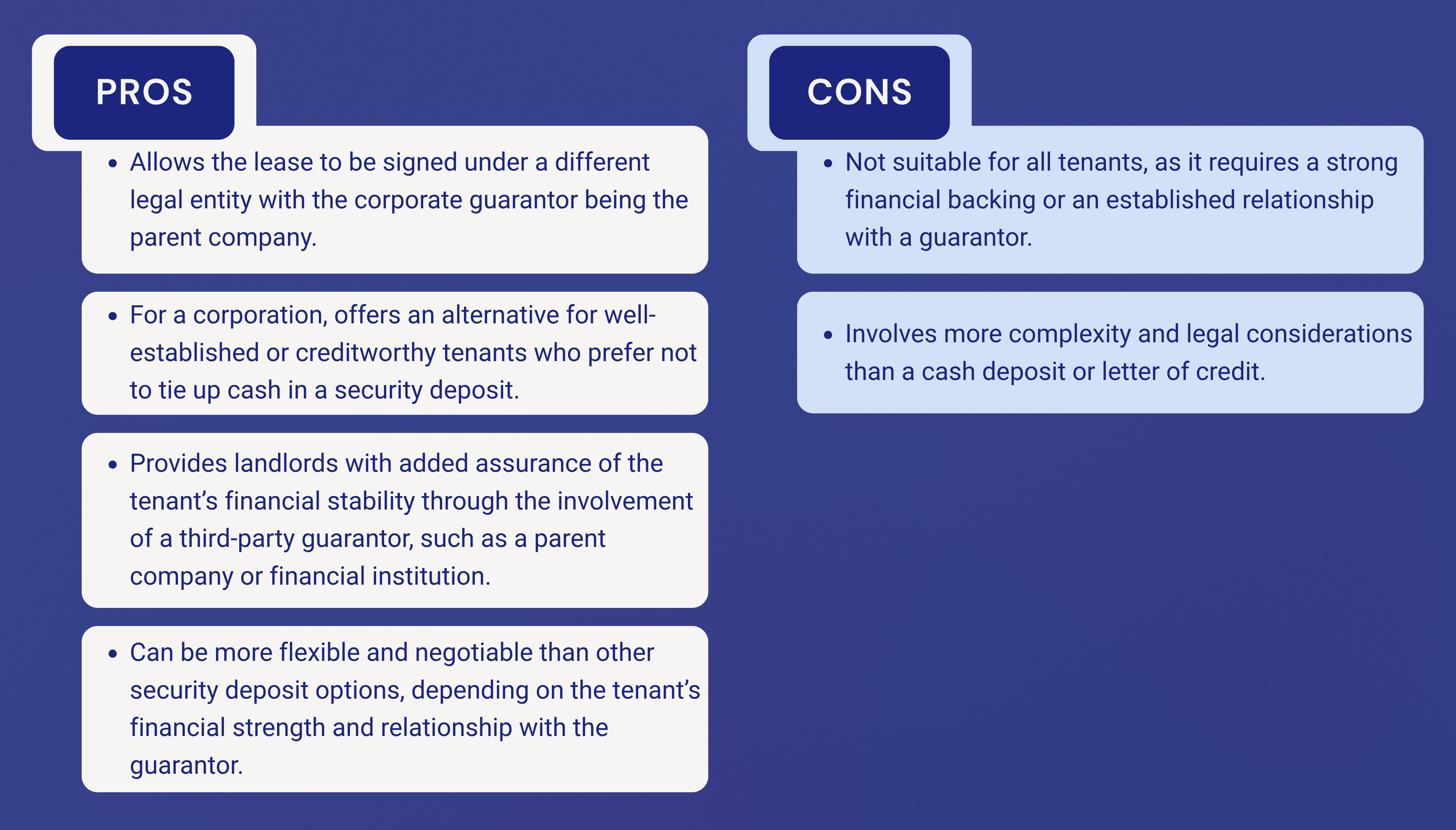
A corporate guaranty is a legal commitment where a legal entity agrees to be responsible for the obligations of the tenant entity. A corporate guaranty is typically used when the lease is signed under a different legal entity, such as an LLC.
4. Personal Guaranty
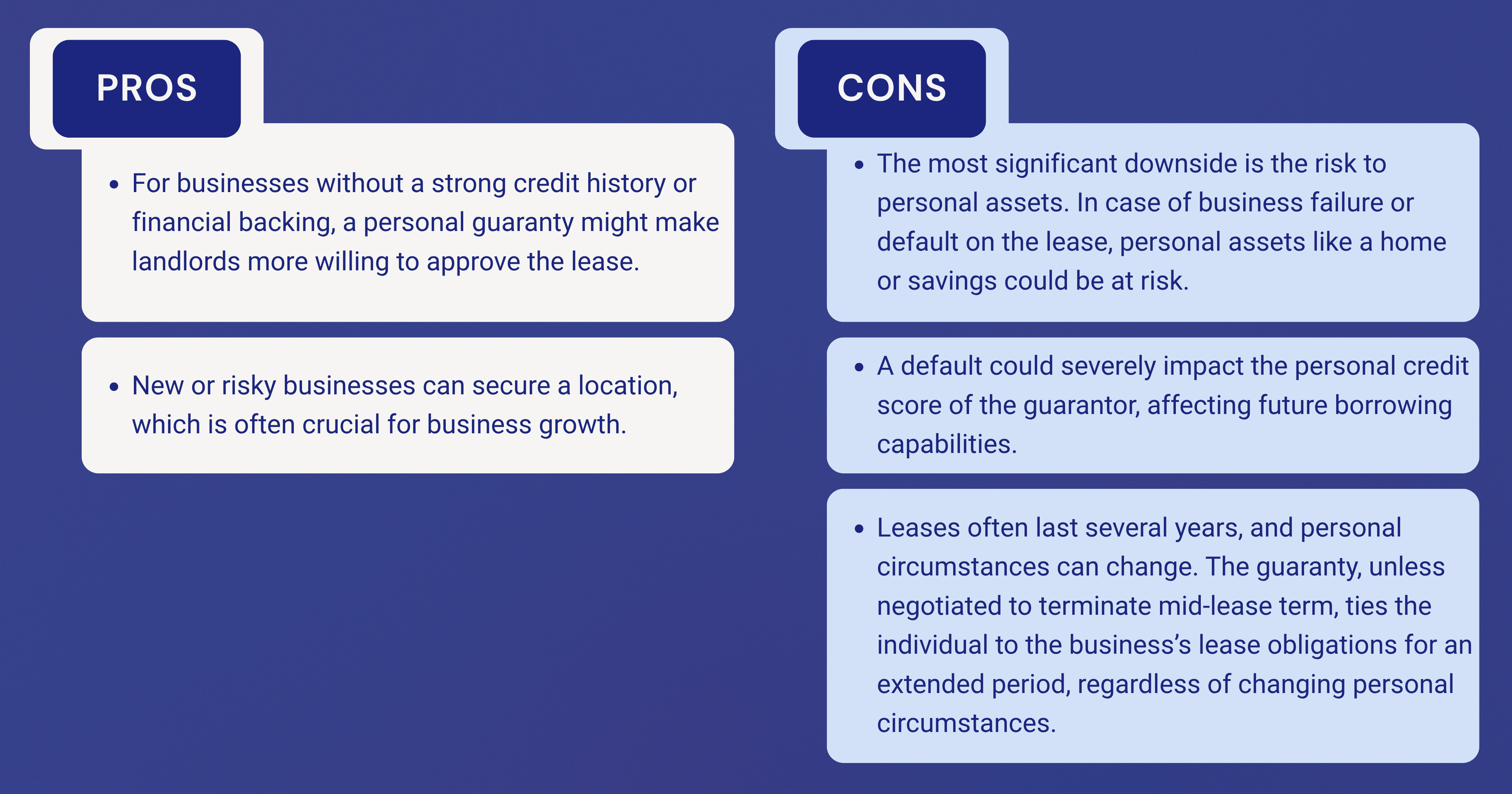
A personal guaranty is a legal commitment where an individual agrees to be personally responsible for the obligations of a business. In the context of a commercial lease, a personal guaranty means that if the business fails to meet its lease obligations (e.g., paying rent), the individual who has provided the guaranty is personally liable.
5. No Security Deposit
Some landlords may offer lease terms that require no upfront security deposit, especially in highly competitive markets or for tenants with strong financials and established reputations. While rare, this option can be negotiated under specific circumstances.
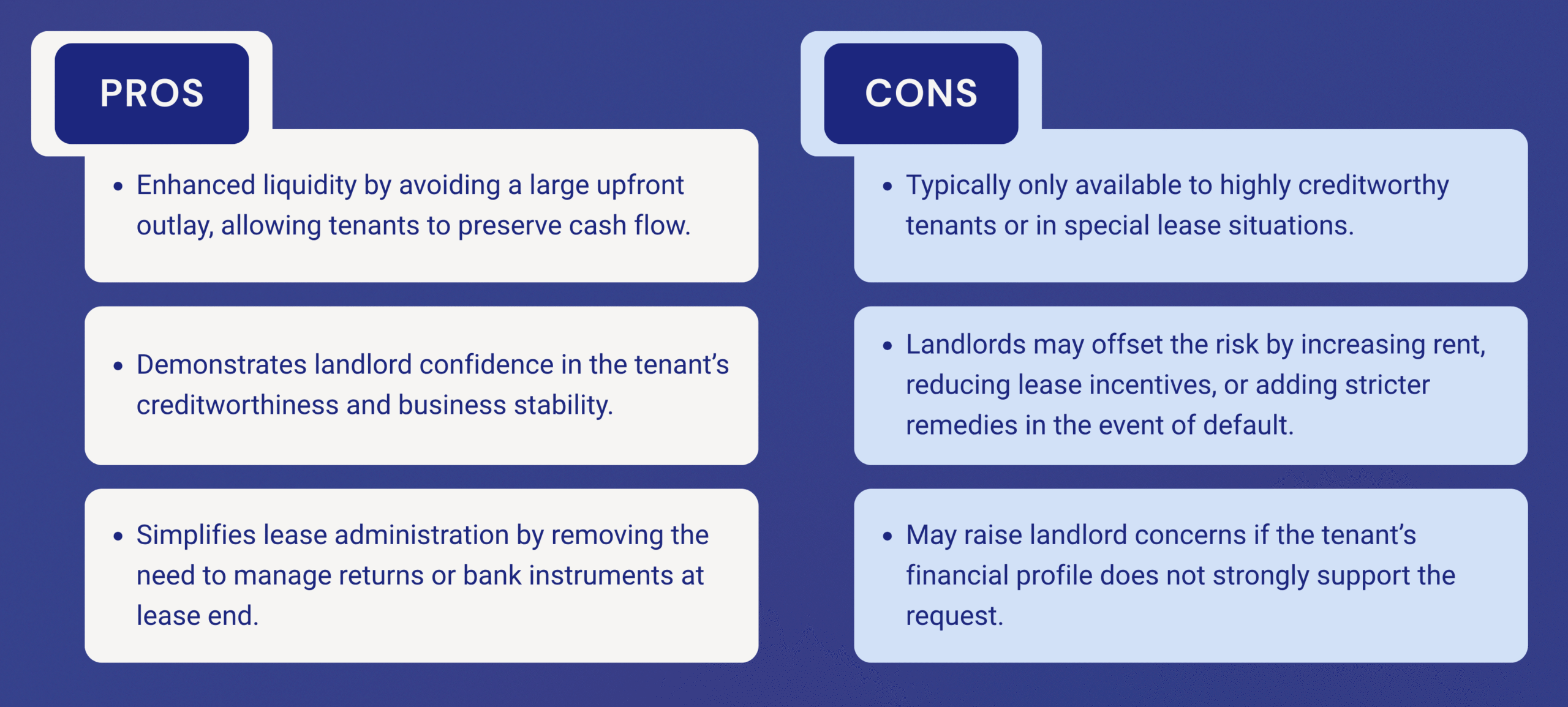
Negotiating the appropriate security deposit option in a commercial lease depends on the tenant’s financial situation, creditworthiness, and risk tolerance. By understanding the pros and cons of each option, tenants can make informed decisions that balance their need for financial flexibility with the landlord’s requirement for financial security.
About National Lease Advisors
National Lease Advisors is one of the top lease administration firms in the country. We have carved out a niche by focusing on clients with ten to 1,000 locations, allowing us to provide a level of service that cannot be matched by full-service global firms. Our model is designed to serve clients with a personalized approach, ensuring their unique needs are met with the highest level of expertise and care.
We work on your behalf to ensure your lease terms align with your financial goals and operational needs.
Contact us to learn how we can support your lease strategy from initial negotiations through long-term management.